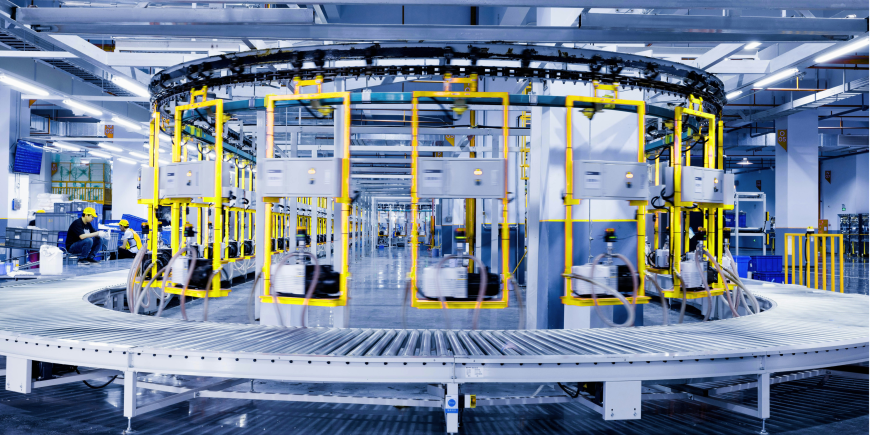
Labour shortages are redefining production capacity
Managing a structural labour shortage has become increasingly complex across industrial sectors. Over the past year, many companies responded by increasing salaries, offering signing bonuses, and improving benefits to attract skilled personnel. However, recent macroeconomic data suggests that these measures alone are not delivering the expected results. When similar strategies are adopted across the market, differentiation disappears, and the underlying constraint remains.
Recent macroeconomic data published by Statistics Netherlands (CBS) validates this stagnation. According to the report, two-thirds (66%) of all industrial companies are still registering direct revenue leakage due to chronic understaffing. Furthermore, one in three companies cites the lack of personnel as the single most critical limiting factor to their growth.
Treating a production capacity crisis strictly as a Human Resources problem is a fundamental error in industrial architecture. When operator availability hits an impassable physical ceiling, the only sustainable solution to protect operational margins is to transition workflow dependency from human availability to predictable mechanical stability. At ACE development & engineering, this shift is reflected in how production challenges are approached, focusing on systemic capacity and throughput rather than headcount alone.
In construction and industry, companies can deploy better and more efficient machines.
what the data actually shows
The CBS data points to three structural issues that directly impact production capacity:
The statistical analysis exposes a severe operational divide. While large enterprises are executing automation investments to bulletproof their supply chains, many SMEs find themselves cornered. Without a structured technological approach, smaller industrial players are forced into a passive mitigation strategy: declining new orders and allowing their market share to erode.
In modern manufacturing, automation is not a luxury metric; it is the sole mechanism available to guarantee the scalability of a facility's physical output. By addressing these three core market failures, operations directors can finally regain control over their throughput.
Revenue loss due to limited throughput
The labour shortage is no longer an abstract issue. It is directly limiting output. Two-thirds of companies are losing revenue because they cannot meet demand with their current capacity.
Wage competition is no longer effective
Increasing salaries and benefits has not solved the shortage. When all companies compete the same way, costs rise, but capacity does not.
SMEs are constrained at process level
Large companies are scaling through automation. Smaller manufacturers, without the same investment capacity, are more likely to cap output or refuse new work, leading to stagnation.
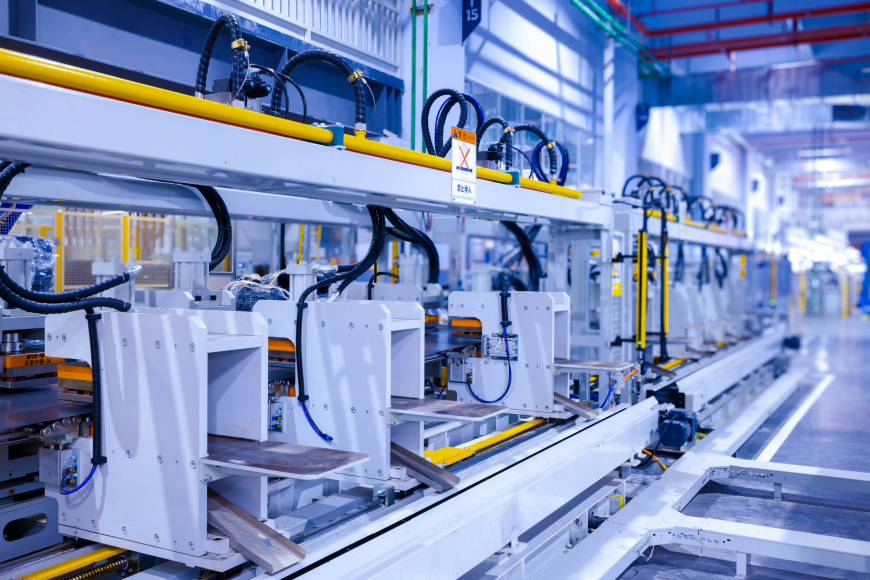
At ACE development & engineering, automation is not treated as a generic add-on. It is a targeted response to specific kinematic and spatial constraints. Critically, our objective is never to replace operators or your vital engineering teams. Instead, it is to remove the low-value manual bottlenecks that limit output. By transferring repetitive friction to machinery, we enable your existing technical teams and engineered staff to operate more efficiently and focus on high-value system optimisation.
The objective is simple: improve Overall Equipment Effectiveness (OEE) across three core areas:
Custom machinery design
Development of mechanical systems and automated work cells that take over repetitive or low-value manual tasks, improving consistency and freeing capacity.
Modular integration
Automation solutions designed to fit into existing production lines, allowing capacity to increase without replacing infrastructure.
Process optimisation
Reducing cycle times, improving line balance, and eliminating variability in critical steps, increasing throughput with the same resources.
From Labour Dependency to Engineered Throughput
Unlike personnel recruitment, where operational costs expand in a linear, continuous fashion, investing in automation engineering with ACE provides a predictable, amortisable cost trajectory. When we design an automated cell for a client, we are not merely replacing an operator; we are introducing repeatable precision, stabilising cycle times, and eradicating costs generated by waste and the reworking of defective parts.
Where is your production being limited?
Contact the specialist engineering team at ACE development & engineering to review your production constraints and identify where capacity can be improved.